Outside India? Please email or WhatsApp us for queries or purchases.
Welcome to a world where the past meets the present, and the exceptional becomes the everyday
Welcome to The Blue Trunk!
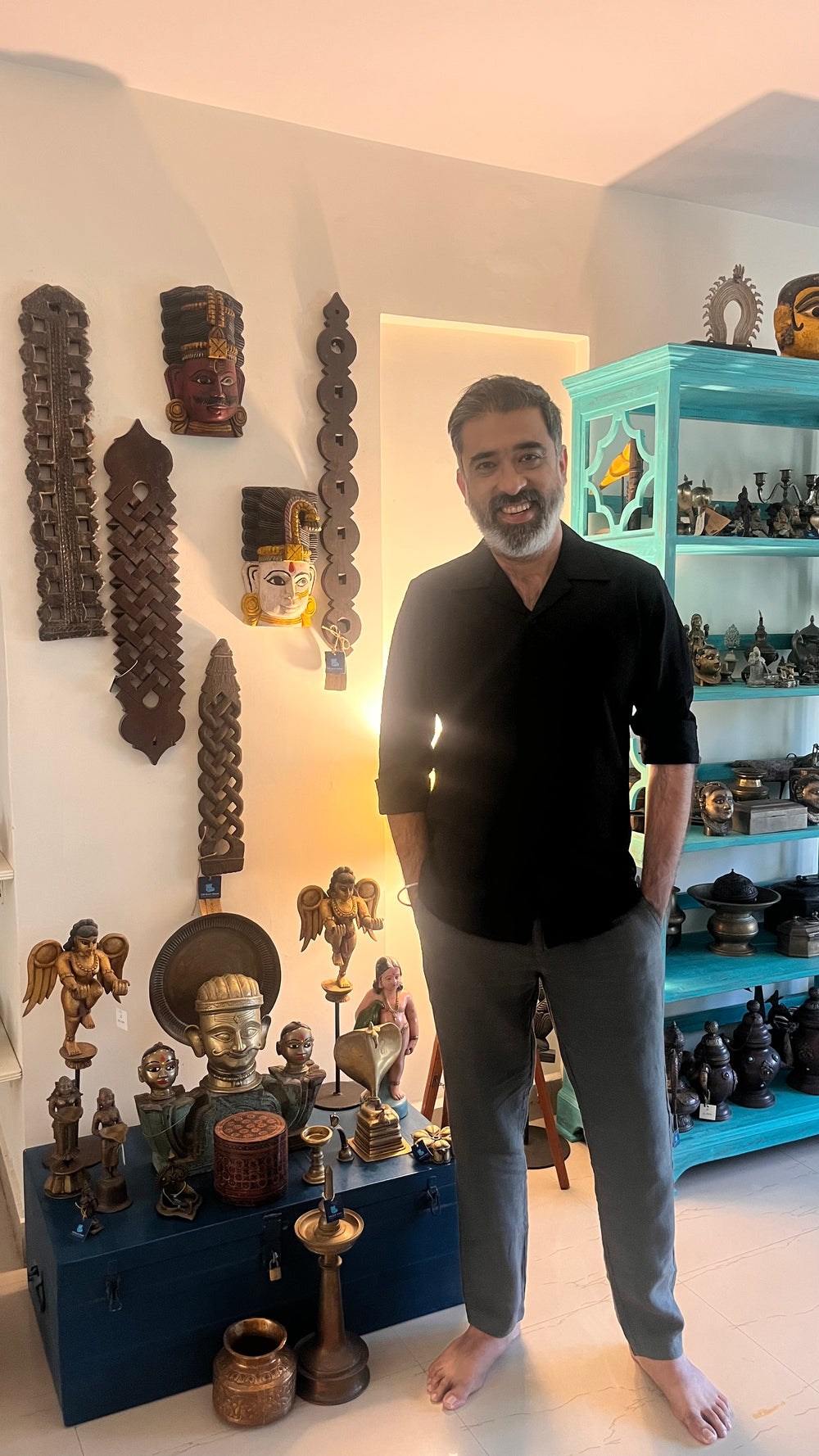
I’m Ujval Anand, the founder—and I’m so glad you’re here.
The Blue Trunk isn’t just about artifacts; it’s about stories, memories, and the magic of India’s heritage. My journey began in the corporate world, but my heart always belonged to travel, culture, and art. Collecting pieces of history filled me with a joy I couldn’t ignore—and that joy grew into The Blue Trunk.
At the heart of our Bombay gallery sits an old blue trunk—a symbol of everything we stand for. Today, I’m thrilled to share that same charm with you, wherever you are in India. Through our website, you can now explore and experience the collection anytime, from anywhere.
So, take a wander, discover what speaks to you, and let’s keep the magic alive—together.
With warmth,
Ujval Anand
Founder & Curator
Vintage Balagopala Bronze | Crawling Child Krishna | Tamil Nadu
Regular priceRs. 9,047.62
/
This vintage Balagopala bronze from Tamil Nadu depicts Child Krishna in a crawling posture, holding a ball of butter in his right hand. Known as Makhan Chor, or the butter thief, Krishna's playful childhood episodes are an important subject in Vaishnava devotional art and have been represented in sculpture, painting and popular religious imagery for centuries.
The small bronze figure captures Krishna in motion, with the crawling posture conveying the youthful energy and playful character associated with his childhood stories. The modelling of the limbs, face and body follows the established visual conventions of South Indian devotional bronzes, where movement and expressive form are used to bring the deity to life.
Cast in bronze using traditional South Indian metalworking techniques, the sculpture is compact enough to have been intended for domestic devotional use rather than as a large temple image. Small bronze representations of deities have long formed part of household worship, allowing sacred images to occupy intimate personal and family shrines.
The surface has developed a natural bronze patina consistent with age and handling. Minor wear and softened details add to the character of the sculpture and are consistent with an object that has been handled and worshipped over time.
Balagopala is particularly associated with the Vaishnava tradition of Krishna worship, where the child form of Krishna is approached through affection, devotion and the intimate stories of his early life. Today, this vintage Tamil Nadu bronze is both a devotional image and a collectible example of South Indian bronze sculpture, appealing to collectors of Krishna bronzes, Indian religious art and traditional South Indian metalwork.
Details
Object: Balagopala / Child Krishna Bronze
Deity: Lord Krishna
Form: Crawling Krishna / Makhan Chor
Material: Bronze
Origin: Tamil Nadu, India
Period: Vintage
Tradition: South Indian bronze sculpture and Vaishnava devotional art
Pose: Crawling, holding a ball of butter
Original Use: Domestic devotional worship
Dimensions: H3 × L2.5 × W2 in
Condition: Vintage with natural patina, minor wear and age-related characteristics
Authenticity: Comes with an authenticity certificate from The Blue Trunk.
Weight(higher of actual or volumetric):
1.0 kg
Wipe the piece with a soft, dry cloth. Do not expose it to direct sunlight, dampness, heat or cold.
Shipping is free in India upto 5 kgs. Please refer to the “Payment, Shipping and Returns” before you place your order.