Outside India? Please email or WhatsApp us for queries or purchases.
Welcome to a world where the past meets the present, and the exceptional becomes the everyday
Welcome to The Blue Trunk!
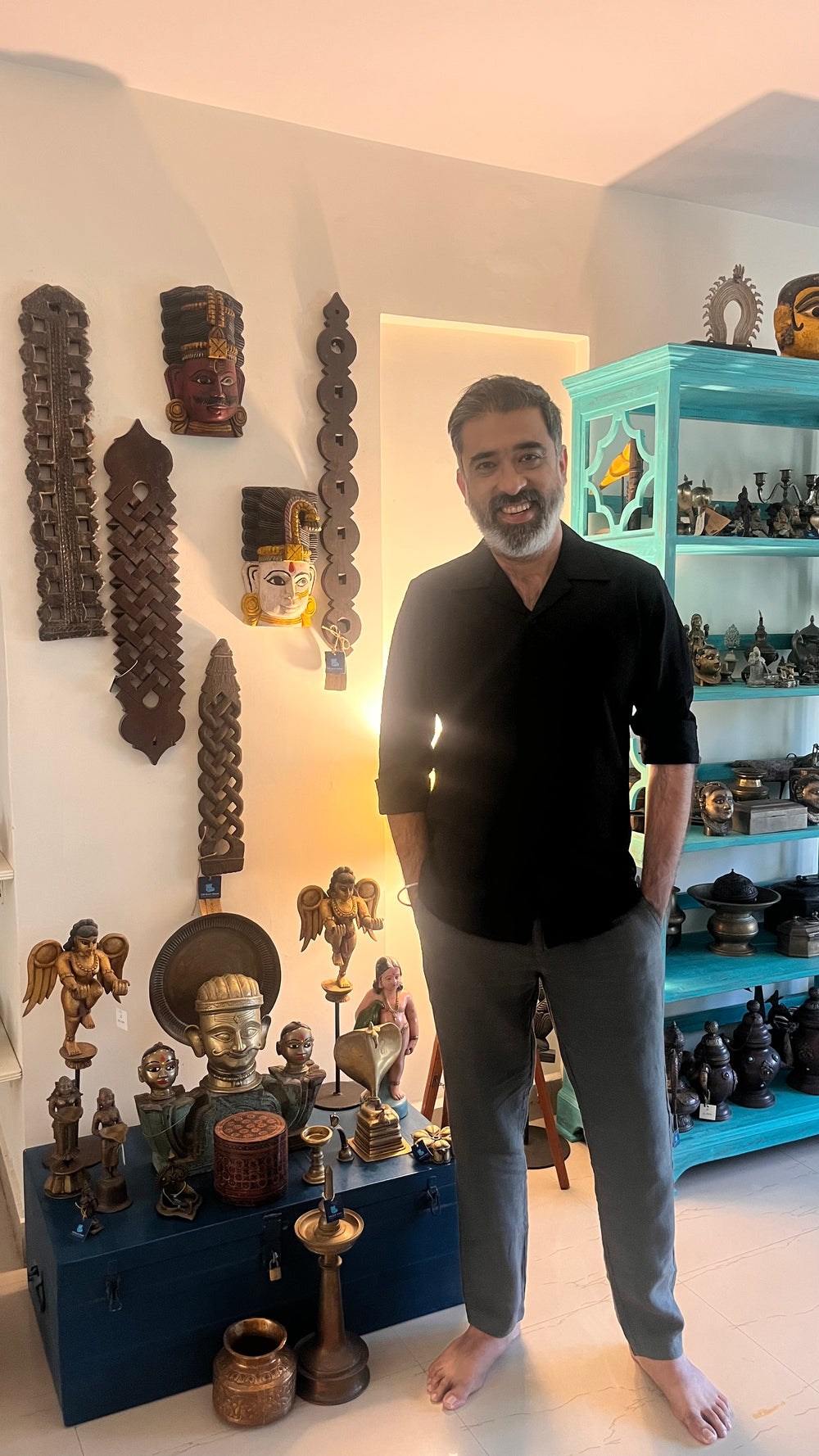
I’m Ujval Anand, the founder—and I’m so glad you’re here.
The Blue Trunk isn’t just about artifacts; it’s about stories, memories, and the magic of India’s heritage. My journey began in the corporate world, but my heart always belonged to travel, culture, and art. Collecting pieces of history filled me with a joy I couldn’t ignore—and that joy grew into The Blue Trunk.
At the heart of our Bombay gallery sits an old blue trunk—a symbol of everything we stand for. Today, I’m thrilled to share that same charm with you, wherever you are in India. Through our website, you can now explore and experience the collection anytime, from anywhere.
So, take a wander, discover what speaks to you, and let’s keep the magic alive—together.
With warmth,
Ujval Anand
Founder & Curator
Wooden Hand Painted Daricha
Experience the unique charm of this vintage daricha(urdu for window) turned into a stunning work of art. Once a part of an old haveli, this daricha has been transformed into a magnificent masterpiece, painted in intricate detail with vibrant colours in a traditional theme. The result is an exquisite piece of art that exudes a captivating aura and unparalleled elegance. The window's vintage character adds to its charm, making it an exceptional decorative artefact that will elevate the beauty of any space. Display it in your home and revel in the beauty and history of this one-of-a-kind piece.This painted wooden daricha—the Urdu term for a window—was originally part of a historic haveli. Architectural elements such as these formed an integral part of domestic structures, serving both functional and aesthetic roles within traditional homes. Following its removal from its original architectural context, the window has been repurposed as an independent object and painted with detailed imagery in a traditional visual idiom. The painted surface introduces a narrative and decorative layer that contrasts with the structural character of the original wood, while retaining the material evidence of age and use. Objects of this type reflect a broader practice of architectural reuse, in which fragments from historic buildings are adapted for display or domestic interiors. As such, the piece operates both as an architectural remnant and as a painted artifact, offering insight into vernacular building traditions, surface ornamentation, and evolving modes of preservation. Viewed today, the daricha functions as a wall-mounted object that documents the life of a domestic architectural element beyond its original setting, highlighting the continuity of material culture through reuse and reinterpretation.
Regular priceRs. 9,900.00
/
Tax included.
Sourced From: Rajasthan
Weight(higher of actual or volumetric):
8.0 kg
Wipe the piece with a soft, dry cloth. Do not expose it to direct sunlight, dampness, heat or cold.
Shipping is free in India upto 5 kgs. Please refer to the “Payment, Shipping and Returns” before you place your order.